Case study · community platform
A directory that lives in the site,
not in a spreadsheet.
Filipina Women in Business had a membership, an events calendar and a growing community. What it did not have was a place to put any of it.
The problem
The public site was the platform’s stock template, so the brand read as generic to anyone landing on it.
The membership itself lived in a Google Form responses sheet. Every new member meant editing a spreadsheet that nobody could see and the site could not read.
The join the community buttons pointed nowhere. A visitor who wanted in hit a dead link.
Six of the sub pages had no mobile navigation at all. On a phone, once you were on one of them, you were stuck.
What we built
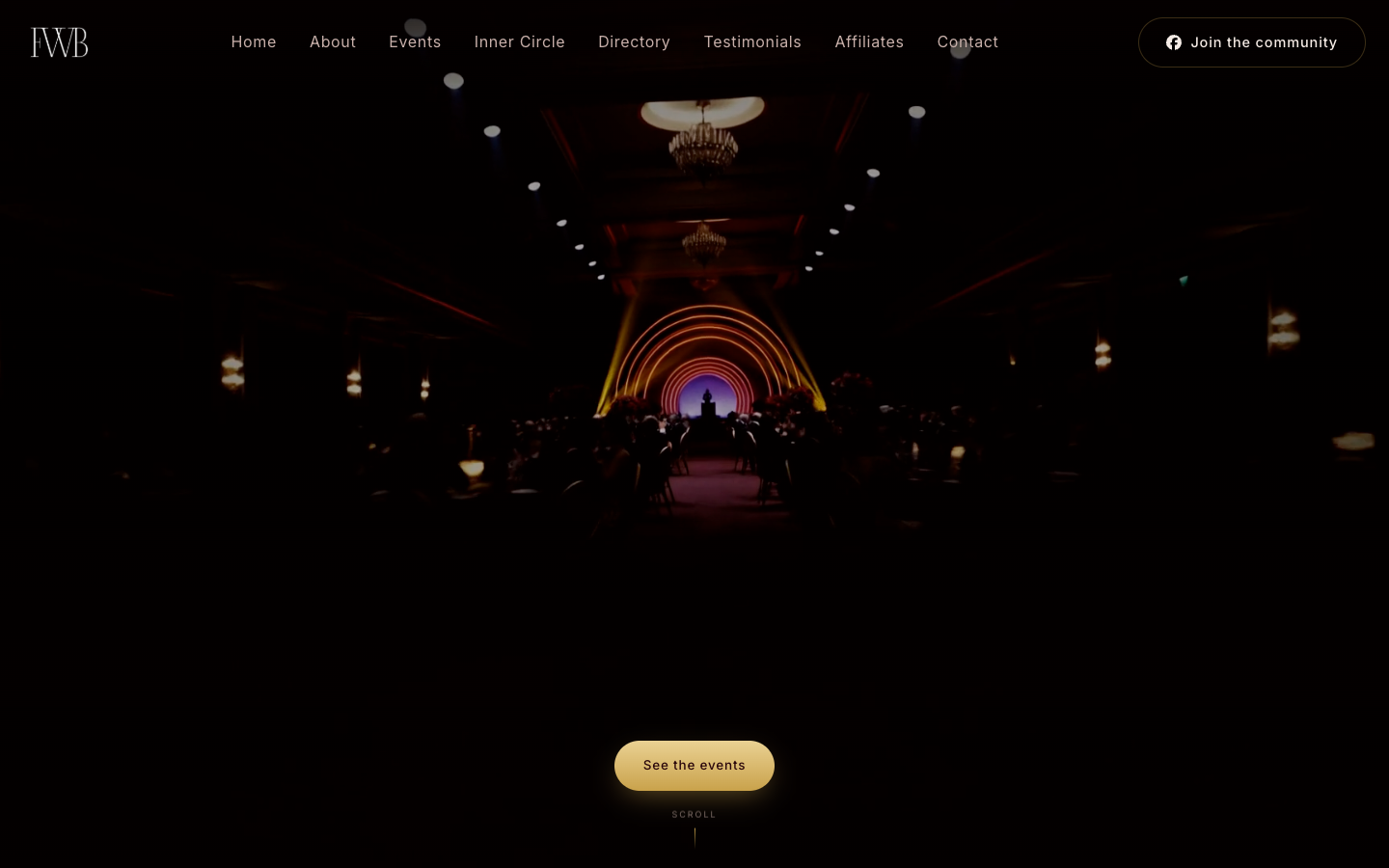
A full site in the brand’s own maroon and gold: home, about, events, inner circle, directory, testimonials, affiliates and contact, plus a dedicated page for the She Goes Within event.
A directory that is data, not markup. Members live in a JSON file and a build script renders the page, so adding a member or swapping a photo is a data edit rather than a rebuild. There is a fallback path that lets a photo be changed inside the builder without touching the file at all.
Lead capture wired end to end: an inbound webhook creates the contact, tags it, and sends the guide, so the free resource arrives without anyone doing it by hand.
One shared mobile navigation drawer injected across every sub page, which closed the six page gap in a single change instead of six.
Every event photo colour graded to the palette in one pass, including frames pulled out of video only clips.
What it does now
The site is live and has been since July, verified against the real domain rather than a preview.
The directory carries the full member masterlist, and adding to it is a file edit.
Community buttons resolve to the real group. There are no placeholder links left on the page.
The trap worth knowing
The builder platform ships its own global stylesheet, and one of its rules bled into our flex layout and blew out the spacing between every paragraph on the site. It looked like a design mistake and was actually a collision. The fix was a scoped rule applied across all nine pages, and the lesson became a house standard we now apply to every page we build in that platform: generic class names collide in both directions, so scope everything.
Your turn
We build the same way
for clients.
Real systems, shipped, with the same standards you just read. Thirty minutes, no pitch.